Hypertension Explained:

What High Blood Pressure Really Means
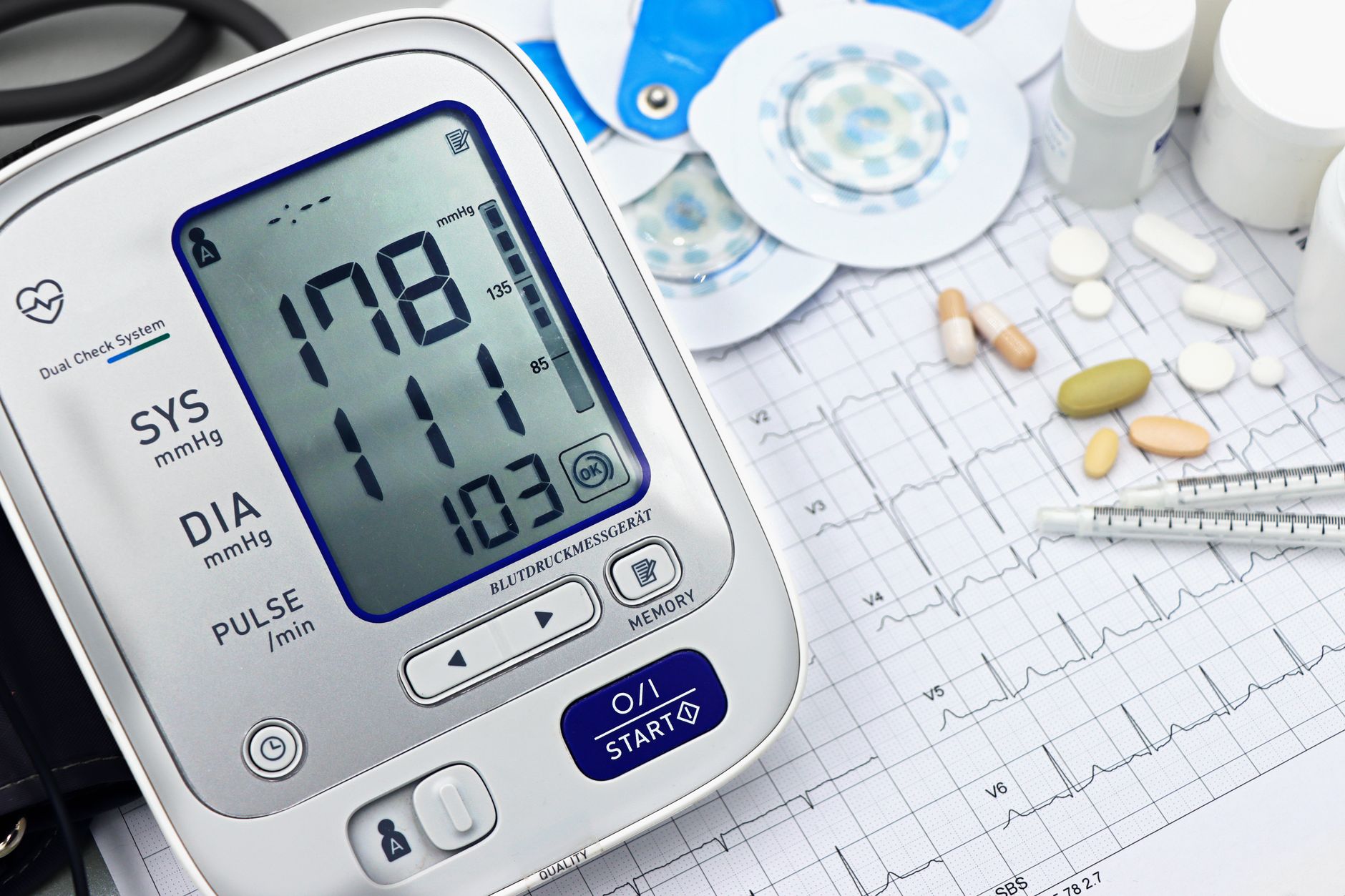
Photo by Marta Branco on Pexels.com

When you visit a doctor, one of the very first things they do is wrap a cuff around your arm, pump it full of air, and give you two numbers. If those numbers are consistently too high, they will tell you that you have hypertension.

But what do those numbers actually mean, and what is happening inside your body? Let’s break down the science of blood pressure in plain English.


🫀 The Garden Hose Analogy: How Blood Pressure Works

To understand blood pressure, imagine a garden hose connected to a spigot.

  • Your heart is the water spigot.
  • Your blood vessels (arteries) are the rubber hose.
  • Your blood is the water rushing through.

If the spigot is turned on normally, water flows smoothly through the hose with a safe, steady amount of force. This is normal blood pressure.

Hypertension occurs when the force of the blood pushing against your artery walls is consistently too high. Imagine turning the water spigot on all the way to maximum, or squeezing the middle of the hose. The pressure inside the hose skyrockets. If that intense pressure continues for months or years, the rubber hose will eventually stretch out, weaken, or even burst. In your body, that constant strain damages your arteries and forces your heart to work dangerously hard.


Decoding the Numbers: Systolic vs. Diastolic

Blood pressure is always written as a fraction, such as 120/80. It is measured in millimeters of mercury (mmHg). Each number represents a completely different phase of your heartbeat. [1]

   120  <-- SYSTOLIC (The Squeeze Phase: Heart actively pumping)
-----
80 <-- DIASTOLIC (The Rest Phase: Heart refilling with blood)

1. The Top Number: Systolic Pressure (The Squeeze) [1]

The top number is the systolic pressure. This measures the maximum force exerted against your artery walls at the exact moment your heart muscle contracts (beats) and pumps blood out to the rest of your body. Think of this as the absolute peak of water pressure rushing through the hose when the spigot pushes water out. [1]

2. The Bottom Number: Diastolic Pressure (The Rest) [1]

The bottom number is the diastolic pressure. This measures the force in your arteries between heartbeats, when your heart muscle relaxes and refills with blood. Even when your heart is resting for a fraction of a second, the blood in your vessels doesn’t just stop flowing; it maintains a baseline pressure. Think of this as the leftover pressure remaining in the garden hose when the spigot pauses between pulses. [1]

📈 The Blood Pressure Chart

According to the American Heart Association, here is how the numbers are categorized for adults:

Blood Pressure Categories Reference Table

Blood Pressure CategorySystolic mm Hg (Top Number)Diastolic mm Hg (Bottom Number)
NormalLess than 120andLess than 80
Elevated120 – 129andLess than 80
Stage 1 Hypertension130 – 139or80 – 89
Stage 2 Hypertension140 or higheror90 or higher
Hypertensive CrisisHigher than 180and/orHigher than 120

This chart visualizes the blood pressure categories based on the American Heart Association (AHA) guidelines, providing a clear reference for your rebranded health site.

Source: American Heart Association Guidelines.


One of the most confusing parts of diagnosing hypertension is understanding how the top and bottom numbers interact. You do not need both numbers to be high to have high blood pressure.

  • To have “Normal” blood pressure: Both your top number must be under 120 AND your bottom number must be under 80.
  • How Hypertension is Characterized: If either your systolic or your diastolic number pushes into a higher zone, your overall diagnosis bumps up to that higher stage. For example, if your reading is 135/75, your top number puts you in Stage 1 Hypertension, even though your bottom number is perfectly normal.

Always remember that a single high reading does not mean you have a medical condition. True hypertension is diagnosed when your numbers stay consistently elevated over time.


Empowering Yourself: Steps You Can Take Today

Learning about high blood pressure can feel overwhelming, but the most important takeaway is this: you have an incredible amount of influence over your numbers. Hypertension is not just a statistic; it is a signal from your body that gives you an opportunity to act. By taking small, proactive steps, you can take charge of your cardiovascular health.

Here are a few practical, daily ideas to help you feel empowered on your wellness journey:

  • Track Your Own Data: Consider investing in a simple, automated home blood pressure monitor. Keeping a daily log removes the guesswork and gives you a clear picture of your baseline to share with your doctor.
  • Make Micro-Adjustments: You do not need to overhaul your entire life overnight. Start by adding one extra serving of vegetables to dinner, trading a sugary drink for sparkling water, or choosing a low-sodium seasoning option at the grocery store. This is exactly how I found out years ago when I was first diagnosed with high blood pressure–realizing how much hidden salt (sodium) was in those “convenient” packages changed everything for me, and cutting them back made a huge difference in my numbers. Try exchanging one boxed or frozen meal a week for something fresh, and watch how your body responds.
  • Find Movement You Love: Physical activity lowers blood pressure by strengthening your heart muscle. Focus on consistency over intensity—aim to produce a little sweat while moving, and remember it doesn’t require hours at the gym. Simply finding 15 to 30 minutes for a walk whenever it is convenient for you–whether that is before work, during a lunch break, after dinner, or on the weekends–makes a massive difference.
  • Prioritize Stress Recovery: Chronic stress keeps your body in a high-alert state. Dedicating just five minutes a day to deep breathing exercises, reading, or unplugging from screens can help calm your nervous system.
  • Be Your Own Advocate: Prepare for your next doctor’s visit by writing down your questions in advance. Ask them to explain your readings, discuss your lifestyle goals, and partner with you on a long-term plan that fits your daily routine.

Small habits build big results over time. By staying informed, tracking your progress, and making intentional daily choices, you are actively taking the wheel of your own long-term health.

Disclaimer: The information provided in this article, including the blood pressure reference chart, is for educational and informational purposes only. It is not intended as medical advice, diagnosis, or treatment. Always consult with a qualified healthcare professional or your own doctor before making any changes to your health regimen or lifestyle choices.


When Getting Care feels Hard…. There is a Clear Path Forward

Have you ever tried to get medical care… and felt like you were going in circles?

Trying to get the care you need shouldn’t feel like a battle—but for many of us, it does. Between delayed procedures, unclear communication, and unexpected roadblocks, navigating the healthcare system can leave you feeling overwhelmed, frustrated, and even discouraged.

I know this feeling all too well.

Over time, I’ve faced my own series of delays and challenges when it came to receiving care. From waiting on clearances to dealing with unexpected setbacks, there were moments where I felt stuck—unsure of what the next step should be or how to move forward.

And what I realized is this… It’s not just me.

So many people are quietly dealing with the same struggles—trying to get answers, trying to be heard, trying to move their health forward without feeling lost in the process. For some, especially those living in rural or remote areas, these challenges can be even greater—longer travel times, fewer specialists, and limited access to timely care.

That’s exactly why I wrote my third book, ClearPath Health Made Simple – Getting Care When It’s Not Easy.

This book was written from a place of real experience, but also from a place of purpose. I wanted to create something that helps make sense of what can often feel like a confusing and frustrating system.

Inside, I walk through practical, real-life ways to:

  • Navigate delays and unexpected setbacks
  • Communicate more effectively with healthcare providers
  • Stay organized with appointments, records, and next steps
  • Advocate for yourself with confidence—even when it feels uncomfortable

But more than anything, this book is about reminding you of one important truth: You are not powerless in your healthcare journey.

Even when things feel delayed…
Even when communication isn’t clear…
Even when the process feels overwhelming…

There is still a path forward.

Don’t let confusion or delays stand in the way of your health.

Click below to get your copy of ClearPath Health Made Simple – Getting Care When It’s Not Easy and start navigating your healthcare journey with clarity and confidence.

Why I Wrote This Book – And Who It’s For

There comes a point in life when lived experience becomes just as valuable as formal education.
This book was written from that place — a place of experience, observation, and deep personal understanding of health.

For over three decades, I have worked closely with medical records, physician documentation, lab results, and patient outcomes. I’ve seen how health conditions are diagnosed. Sometimes symptoms are missed, or sometimes we’re just overwhelmed with a lot of information that we do not understand. Early awareness can make a life-changing difference. But beyond professional experience, this book was also born from my own personal health journey.

I’ve been the patient.
I’ve asked the questions.
And I’ve lived with the consequences of not knowing what I wish I had known sooner.

This book exists because knowledge empowers people — and I believe everyone deserves access to clear, understandable health information.


Why I Wrote This Book

I wrote this book to help bridge the gap between medical language and real-life understanding.

Too often, people leave doctor’s appointments confused, overwhelmed, or unsure what questions to ask next. Lab values are mentioned. Diagnoses are discussed; however, no one explains what it all truly means or why it matters.

I wanted to create something that:

  • Explains health concepts in plain language
  • Encourages people to advocate for themselves
  • Helps readers feel more confident when navigating healthcare
  • Shares insight from both professional experience and lived reality

This is not a medical textbook.
It’s a guide — written from the heart, grounded in real-world experience.

Who These eBooks Are For

These eBooks are for everyday people, especially those who:

  • Want to better understand their health
  • Have chronic conditions or a family history of illness
  • Feel overwhelmed by medical terminology
  • Want to be more prepared for doctor visits or ER visits
  • Believe prevention and awareness matter
  • Want reliable health information without fear or confusion

They are especially helpful for:

  • Adults navigating health changes as they age
  • Caregivers supporting loved ones
  • Individuals who want to ask better questions in medical settings
  • Anyone who believes early awareness can save lives

If you’ve ever said:

“I wish someone had explained this to me sooner…”

Then these books were written for you.


What You’ll Gain From Reading

By reading these eBooks, you’ll gain:

  • Clear explanations of important health concepts
  • Practical insight you can actually use
  • Confidence when speaking with healthcare providers
  • Awareness of symptoms that should never be ignored
  • Peace of mind through understanding

My goal is not to overwhelm you — but to empower you.


A Final Word

This book is part of a larger mission — to help people feel informed, confident, and supported when it comes to their health.

Thank you for being here.
Thank you for choosing knowledge.
And thank you for investing in your well-being.

Marsha
You Empower Your Health

Dr. Elizabeth Ofili: Pioneering Cardiologist in Health Disparities

Continuing to recognize black Americans during Black History Month, this week I’m featuring Dr. Elizabeth Ofili:

Dr. Elizabeth Ofili is a renowned Nigerian-American cardiologist, researcher, and professor. She is known for her contributions to cardiovascular health, particularly in underrepresented populations. She has been a leader in promoting diversity in medical research and advancing heart disease prevention.

Here are some Facts About Dr. Elizabeth Ofili:

  • Background & Education: Born in Nigeria, Dr. Ofili obtained her medical degree from Ahmadu Bello University in Nigeria. She later earned a Master’s in Public Health (MPH) from Johns Hopkins University. She also completed her cardiology training in the United States.
  • Medical Career: At Morehouse School of Medicine in Atlanta, Georgia, Dr. Olifi is a Professor of Medicine and Senior Associate Dean for Clinical and Translational Research.
  • Research & Contributions:
    • Dr. Ofili has been a leading researcher in health disparities, focusing on how heart disease affects African American communities.
    • She conducted groundbreaking studies on hypertension, heart failure, and cardiovascular risk factors.
    • Led several major National Institutes of Health (NIH)-funded projects, including initiatives to improve health outcomes in minority populations.
  • Leadership & Impact:
    • First female president of the Association of Black Cardiologists (ABC).
    • Instrumental in developing research networks to enhance participation of minorities in clinical trials.
    • Advocate for increasing diversity in STEM and medical fields.
  • Awards & Recognitions:
    • She has received numerous accolades for her contributions to medicine and public health, including recognition from national health organizations.
  • Sources:

https://cfmedicine.nlm.nih.gov/physicians/biography_240.html?utm_source=chatgpt.com

https://cfmedicine.nlm.nih.gov/physicians/biography_240.html?utm_source=chatgpt.com

https://academyhealth.org/about/people/elizabeth-o-ofili-md-mph-facc?utm_source=chatgpt.com

Celebrating Black History Month & Heart Health

African American Historical Figures History Lesson Presentation in Brown Neutral Illustrative Style – 1

The month of February is rich in history as the country celebrates Black History Month as well as Heart Healthy Month! Here, I will try and enlighten you as well as recognize some of our history-makers in both black history and ways to have a healthy heart, not just in February but always!

This year, Morehouse School of Medicine, located right here in Atlanta, Georgia, is a private historically black medical school and is one of the nation’s leading educators of primary care physicians. In 2025, they have launched a year-long celebration marking five decades of advancing health equity. They were founded in 1975 as a two-year medical education program. Morehouse School of Medicine opened its doors at a single trailer on the campus of Morehouse College in the summer of 1978 with an inaugural class of 24 students in its two-year basic medical sciences program. Students who completed the program earned the ability to transfer to four-year institutions to complete their education. The medical school was incorporated in Georgia in 1980, officially became an independent institution in 1981 and established a four-year medical school as Morehouse School of Medicine in 1985. There have been nearly 1,900 physicians who have graduated from MSM, with approximately 60% choosing to practice in Georgia. Morehouse School of Medicine is commemorating its 50-year history with many different events open to the public throughout 2025.

Heart disease as been (and still is) the No. 1 leading cause of death since 1950 in the United States, according to the CDC. Also according to the CDC, the age-adjusted heart disease deaths rates dropped to 161.5 per 100,000 population in 2019 compared to 182.8 age-adjust heart disease deaths per 100,000 population in 2009. From 2009 to 2019, the age-adjust heart disease death rates were higher for males than females.

Known Facts:

  • Every year, about 805,000 people in the US have a heart attack.
  • Someone has a heart attack every 40 seconds in the United States.

These are some pretty alarming statistics regarding cardiovascular disease, but 80% is preventable. At ALL ages, these are just some of the many ways you can prevent cardiovascular disease: Eating healthy, being physically active, avoiding tobacco and managing your cholesterol. Throughout the remainder of February, I will delve deeper into many ways to prevent cardiovascular disease as well as knowing some of the signs of cardiovascular disease.

DO YOU HAVE A PLAN?

This is a topic that a lot of us choose to remain silent about. Death. Yes, we ALL will be facing that five-letter word eventually. Do you have a plan in place for your loved ones once you are gone? Do you have a plan in place even if for some unforeseen reason you become incapacitated and unable to speak or make decisions for yourself? If you do have a plan in place, do your loved ones know where to retrieve this information?

As someone who has worked in the medical field for 30+ years, I have transcribed and seen thousands of patient medical records and it saddens me to see so many patients who become either suddenly ill or suffer a long-term illness but do not have a plan in place or assigned a loved one to take carry out your wishes once you have passed on. Or, what’s even worse than that, patients who become ill and certain family members disown them and now that patient has become a ward of the state – meaning now that this patient has become so sick, certain family members have abandoned them and now SOMEONE has to speak on behalf of this patient, but unfortunately, that someone is the probate court system (in the state the patient resides). Either a social worker (representing a particular hospital) or chaplain or again the court system has to now become the guardian of this very ill patient because that patients loved ones want nothing else to do with them!

We’re living in an age and time where there is NO excuse that this is still happening! There are so many valuable resources out here for us to educate ourselves on. Even if you’re that mean, grumpy, most hated person ever to where you don’t have a friend in the world, this still does not give you a reason to not have some type of plan in place [even if you choose to utilize probate court] for your legacy you may have created all the way to the finest detail of where you want your remains to go to.

Losing a loved one is stressful and traumatizing enough. Not having a plan creates more stress and anxiety for those that cared about you. When certain loved ones come to you to try and talk about this when you’re healthy and still mentally competent and you still refuse to discuss it or continue to procrastinate by putting off these plans, this is what I consider unintelligent, foolish and downright selfish! We waste a lot of time (and money) on trivial things, things that are not uplifting us or things that don’t really matter.

Your last wishes or plans for your assets/possessions left behind do not have to be some elaborate, expensive or over-the-top plan – just something straight to the point and simple and making sure whomever you assign it over to that they know exactly where to go to get your information and the instructions you have left for them to carry out.

No matter your choice, whether a Last Will and Testament, an Advance Directive, or Power of Attorney (for Healthcare) or whatever legitimate legal document is out there for your specific needs, please get a plan in place NOW for your wishes and always let someone know your plans for storing this information so they will not be in a panic, distressed or ill-prepared. Maybe you have a plan in place but it’s been years since you’ve updated your information, beneficiaries, passwords, etc. Take the time to review this information and always keep it updated.

Let’s go into 2025 not wasting any more money or wasteful time. Instead of partying for every holiday, eating yourself sick, etc. etc., take that money and spend it on legalizing your last will and testament and making your loved ones feel a little more at ease, knowing you’ve taken full responsibility of your life as well as in your passing. Today is a good day to start!

Signs that you are Dehydrated

The human body makes up about 65% water (in males) and approximately 55% (in females). The brain is one of several organs with the highest percentage of water – 80-85%! Your body loses water throughout the day in different ways – going to the bathroom, sweating and breathing. Plus, if you’re on certain medications such as a diuretic (water pill for high blood pressure) or chemotherapy which can cause diarrhea and vomiting which leads to dehydration, it is extremely important that you stay hydrated with water.

I have always had a love for medicine and how the body functions and finding positive ways to help by encouraging others to empower your own health, as well as finding preventative ways to stay on top of your health. So, when I was listening to a sermon from a well-known minister and they mentioned about their experience of becoming dehydrated, that piqued my interest! This person went on to say how they had become so ill with either a virus, food poisoning or something to the point that while treating the illness, the side effects of the illness (dehydration) was worse than the illness itself. It threw their whole body into chaos. They literally had to be admitted to the hospital to get rehydrated with fluids and electrolytes.

If your body is not adequately hydrated PRIOR to you coming down with an illness which causes nausea and vomiting, this can lead to severe dehydration, which could lead to shutting down of your organs!

Some symptoms of dehydration include: dry mouth, dizziness, lethargy, fatigue and even confusion.

Let’s keep our bodies well-hydrated now with plenty of fluids such as water, orange juice, cranberry juice, any non-caffeinated drinks, and replenish your body’s electrolytes with sports drinks such as (Gatorade and for babies and children, drinks such as Pedialyte), BEFORE spring/summer arrives, BEFORE going out to exercise, BEFORE hitting the gym and definitely while taking certain medications such as a diuretic. Be careful not to overhydrate either – that’s why it is important to know your body in order to have an adequate balance of fluid intake.

An Unspoken Epidemic

I know – it’s been a VERY long time since I’ve posted here on my blog….. like 2.5 years long! Well, I’m back and all is well. Lots and lots have happened in these two years, but I will try to get caught up with a few things and stay current on 2023’s events.

So, I want to get right into my blog titled “An Unspoken Epidemic”. In my employment duties still in medical records, I noticed this, but it did not really hit me until a YouTube influencer I follow, ‘YourFavNurseB‘, spoke about this. She is a 32-year-old RN and her YouTube channel focuses on growing/coaching those who go from a CNA to an LPN to an RN, concentrated upon working in nursing homes. She got right to the point on this topic saying there are too many 50-60 year-olds in nursing homes!!! That particular shift she had worked, she mentioned that she had about 51 patients to see after and approximately 75% of her patients were in their 50s and 60s, some even younger. Ya’ll this is a true epidemic. This is not only happening in her city, but in every city/state in the U.S. These illnesses that has brought the majority of these patients to a nursing home are preventable.

As I mentioned earlier, I too have noticed this horrible statistic when I am working and analyzing patients medical records. When patients are admitted to a hospital and their stay could be 30 days, 10 days or even 5 days, my job is to analyze each report – each History and Physical, each Emergency Room visit, each Progress Note, etc. Some of these progress notes can be 220+ pages long. Once a patient is discharged from the hospital, the patient is either too sick to go home so the hospital has no choice but to refer them either to LTAC (long-term acute care facility) or to a nursing home facility. Some of these illnesses these patients are being admitted to the hospital for are very preventable by the patient, but when they are at this stage (of getting admitted to a nursing home) that means they have not cared for themselves, not taken their medications and just practically let themselves go. Look – being in your 60s is NOT old! Nursing homes were geared to be for the very, very elderly population when family members can no longer care for their loved ones for various reasons – not 40, 50 and 60 year-olds.

I do understand the last several years have been extremely challenging mentally for the entire world. There have been many events taken place over the recent years that make anybody want to give up or throw in the towel. Lots of traumatic events, losing of many loved ones, still not getting over a situation that you thought was hurtful many, many years ago.

We ALL have been through a lot – some our whole lives. Focusing on past traumas, past hurts, things we lost, etc. must change. All of these events have a profound affect on our physical well-being. We must start with changing our mindset. At the end of the day, when things are out of your control, there’s nothing you can do about it. You cannot bring a loved one back, you cannot go back to your childhood and ‘fix’ whatever problem you suffered, but you CAN confront the issue to try and get some closure, but to let it continue to fester or continue to marinate on how bad it hurt you is not helping. It only continues to hinder you emotionally, physically and spiritually.

The majority of these illnesses and problems are things like diabetes, hypertension, high cholesterol, alcoholism, cigarette smoking and drug use. Not being knowledgeable about the use and the side effects of different medications (or over-medicating), can also cause a lot of different medical problems . Also, lacking certain nutrients and vitamins in your body can also cause an array of illnesses.

I’m hoping that by bringing up this topic and shedding some light on this subject will help someone. For me, this is actually an embarrassing epidemic because I too am in my 60’s – 64 to be exact – and I KNOW that my generation were taught on how to live off the land. But, I too have to remember that my generation were pretty much the creators of eating processed foods, fast-food meals, trying to make life ‘quicker’ and ‘simpler’… Either way, we must mature mentally, have a different mindset and learn skills for yourself to remain healthy. There is too much out here these days to educate yourself and continue to learn about everything you can learn! Watching the carb intake, the meat intake, cutting out sugar, cutting out fried foods, not eating meals after 6 p.m. and exercising whether walking, jogging, hitting the gym, whatever works for you, are all ways to prevent the above-mentioned diseases which can then prevent the young from residing in a nursing home!

Let 2023 be the year you love on yourself more. Take steps daily – whether 10 minutes per day and increasing at your tolerance (some sort of exercise), changing your eating habits one meal at a time and train your mind to think differently. Take it from me, a person who has had multiple health issues, starting from the time I was born until now – it is NOT easy to make these changes, but it can be done. I get up daily and start my day listening to something inspirational/motivating and I end my day by taking time for ME and all the tools that make me comfortable and peaceful when I lie down to sleep. I will NOT be a 60 something year-old residing in a nursing home!

2020 – THE YEAR OF…..BEING GRATEFUL

It’s all in how you view things: This has been one of, if not THE most difficult year for ALL of us we’ve ever faced. This virus, COVID-19, along with political unrest, unprecedented racism and hate – 2020 has changed practically EVERYONE’S life. I’m so grateful for the many blessings and all the challenges that 2020 brought me. You may say, “how” the heck was 2020 filled with blessings with so much calamity happening? For me, here’s how:
Was blessed in early February 2020 to accept a travel assignment job with a 6-month contract to work in beautiful Phoenix, AZ.
– COVID-19 really hit the world and mom’s nursing home (all nursing homes) stopped visitations for fear of the nursing home residents contracting the virus, but as of December 2020, my 99-year-old Queen mother thankfully has NOT contracted the virus! Many around her did, including my aunt, but God kept the family strong with some sense of peace!
Many lost their jobs and many businesses closed their doors because of this virus and the downward economy, BUT GOD kept MY immediate family employed throughout this year. Even my once homeless oldest son who friends and family gave up on, he actually did better than all of us financially during the pandemic!!
This next part really still has be shouting and giving praise: – After my 6 month assignment ended in August, (I was offered the job on a permanent basis in Phoenix, but because of my mom, being so far from her, I sadly declined the offer) I was blessed to STILL find employment, (even at 61 years of age). Accepting this new assignment meant moving back to Atlanta where I previously lived, not in jackson, MS where I was currently residing. This was not only just “a job” but a job at Emory Healthcare! A place I’ve tried getting a job for YEARS back in the day! Not everyone gets to work here, especially during a pandemic and a hiring freeze!!! While Emory itself had a hiring freeze, a different staffing agency WAS hiring to work at Emory and they trusted ME to work at Emory and I’m forever grateful!
While settling residency and employment back in Georgia, life got pretty stressful; worrying about if I made the right decision, being able to afford everything on my own as this assignment at Emory I accepted was a SIGNIFICANT drop in pay from the previous contract job in Phoenix, and worrying about my mom (though Atlanta WAS closer to Jackson than in Phoenix) and her state of mind, feeling alone in the nursing home, not FULLY understanding why family could not see her (5 months into the pandemic and NO visitors allowed!). With all this on my mind DAILY, no longer eating healthy, and not taking my meds as directed, on October 11th, while at work, I had a heart attack. I literally was walking/working and actively having a heart attack AND a heart aneurysm!!
God’s grace – Had I not been working at a hospital (which Emory has ALWAYS been my favorite medical facility in the world), had it not been my assigned weekend to work, had I not listened to the warning signs and had I not gone to the ER to be seen WHEN I did, I WOULD NOT be alive today. Point blank. Period.

God undoubtedly has more work for me to do. Now I know my purpose for still being here. I want my story to be a shining light to someone who may not see the good in this life. Yes, hundreds of thousands have died from this horrible virus in 2020, people are hurting, financially struggling and people are scarred for life by this pandemic and other problems we faced as a country. Think about it, I TOO am scarred (literally my heart for a second time!) from all the stress and hurt and losses 2020 brought me as well, but we ALL are still here, breathing and living! God chose US and gave US another chance to make life better for someone else!! God I’m forever grateful for your grace and mercy.

Let’s all go into 2021 with a new lease on life. Let’s all continue to mask up, social distance and get back to being GRATEFUL for what we have so that we can rid this awful virus from this earth and get back to caring for one another, hugging and embracing each other again!

Shock vs Denial

I’m not quite sure if it was shock or being in complete denial or what was going on with my thinking, during my most recent illness, but I know one thing – my doctor sure put it in perspective when I noticed the note he added to my chart after my first 30-day follow-up appointment I had with him last Thursday. There was one sentence he added to my notes stating, Pt is still in disbelief that she has had a heart attack”

Timeline: October 11th at 7:30 a.m.: I wake up with a burning sensation in my chest. I’m saying to myself why am I feeling like indigestion pain – but I do nothing about it, just basically brush it off.

October 11th around 1:00 p.m.: Preparing to head to work and while riding the train to work, I get a brief pain in my chest which lasted less than a minute. I immediately take a sublingual nitroglycerin I always carry in my purse (red flag #1)

October 11th 2:30-4:00 p.m..: The burning in the chest sensation happens again (red flag #2) and I ask my coworker for an antacid tablet, take it and feel better for a few more hours.

October 11th 8:00 p.m.-9:00 p.m.: I go and make my usual rounds at my designated pickup locations to pick up patient medical records and boy, do I really feel like the inside of my chest is literally on fire (red flag #3). As I’m pushing the basket, I then begin to feel as if my legs are being electrocuted (only way I can describe it)!. THAT symptom finally got my attention but I’m still determined to complete my rounds. By the time I get to the emergency department (last location to pick up records), I then began feeling really weird, some slight chest pain but that’s it! This is when I decided to go ahead and be checked out in the emergency room…These symptoms were very different than the symptoms I had during my heart attack 10 years ago.

October 11-12 early morning hours: I’m now being taken care of quite swiftly by nurses, lab techs, phlebotomists, etc., upon admission to the emergency room. Without me asking, a tech or nurse says to me in a very calm, quiet voice “your troponin level is 11” (red flag 3, 4, 5). A troponin test measures the levels of troponin T or troponin I proteins in the blood. These proteins are released when the heart muscle has been damaged, such as occurs with a heart attack.  Normal levels are measured at 0.01-0.02.

October 12 at some point (lost track of time): So everything is happening so fast, this is where I guess I just draw a blank mentally. I’m making calls to loved ones, coworkers advising them of my whereabouts telling them ‘no it’s not a heart attack’. Finishing up in the cath lab and one of the techs looks down at me as if he’s so incredibly sad and ready to cry telling me “Ms. Johnson, you have multiple, multiple blockages in your arteries. You’re very lucky you came in when you did” (red flag 6,7 8 I’m having a heart attack).

THAT was the reason for the emergency 3-vessel coronary artery bypass graft (CABG) on October 13th because I had a heart attack because I had multiple blockages (of plaque) in my arteries) and finding out a day AFTER the bypass that I also had a heart aneurysm!!

I think I became so fixated upon learning I had an coronary aneurysm and worrying if I’m going to survive this bypass surgery, I guess I somehow did not connect the dots that ALL of these events were because I DID have a heart attack!

Fast forward to 6 weeks post bypass surgery and aneurysm, I’m so incredibly grateful to be alive and recuperating. Even though for a day or so I felt some kind of way after reading the note that the surgeon put in my record about being in disbelief I had a heart attack, I can really appreciate him being more than a surgeon – being a blunt, upfront doctor who really cares about his patients and recognizing the denial we can be in sometimes….. My point for this blog is to make men and women, be aware of any type of symptoms you may be having, especially regarding chest pains – do not brush it off like I did. Please get seen – do not wait hours or even days to get checked out.

I hope my detailed timeline of symptoms, occurrences can help someone, prevent them from suffering major heart damage.