All posts by Marsha Hughes-Johnson

Editing versus standard transcription

microphone2This ‘new wave’ of transcription called voice recognition is very similar to being a newspaper copy editor. I have had the opportunity to work at a newspaper many, many years ago as a newsroom clerk.  That entailed more than just answering the phones, taking messages for the reporters in the newsroom.  When the newsroom got pretty busy,  I had the privilege of doing the work that a copy editor would do.  A copy editor would edit the information of what the AP (Associated Press) and other news outlets’ news feeds brought in.  This information came over the computer (as they considered it back then as being “hot off the press”) which constantly provided  updated news events, articles, etc.  and the copy editors would edit for correct spelling and verbiage of that article, thus signing off on it to meet press deadlines.  Pretty similar to today’s speech recognition for medical transcription.  One had to possess a journalism degree just to be a copy editor!  Medical transcription has basically become this ‘copy editing’ thing – with less and less pay which is NOT good.

When I first began voice recognition  back in 2007, I believe, I thought wow, this is going to be great!  I feel like I’m back doing the copy editor thing again.  Not so fast!  Medical transcription takes a lot of medical terminology knowledge, research skills and almost the same amount of knowledge that a nurse and/or doctor may have.  We must know the different laboratory values, the different medication dosages, and the correct/accurate terms because if those are wrong, then that health documentation is wrong.  Nurses and doctors and other healthcare professionals depend on us to know exactly what we’re transcribing and, whether they really realize it or not, we are the lifeline of that patient’s healthcare documentation!  Having all of this nonsensical garbly-goop come across through voice recognition is really dangerous.  Heck – even back in my days of copy editing, the information didn’t come across the ‘AP wire’/computer that awful!

Don’t get me wrong – I do not hate voice recognition.  It, as well as EMR’s have been useful in some ways.  There are way more human bodies on this earth now than ever before and yes – the quicker we can get some things out faster than paperwork, the better.  But, from a transcriptionist’s point of view, it can still be fine-tuned a lot.  And by the way, it will never totally replace the transcriptionist!

As we must keep up with technology and the many advances of health information management and technology, it is painfully obvious that voice recognition is not going anywhere anytime soon – at least the creators of it have definitely invested way too much money for it to go away. Stay tuned this week for continued information as we continue to recognize Medical Transcription Week this week, as we’ll look into how a very small number of souls are passionately and vigorously standing up for us  MT’s to hopefully get some standards in place and the respect and better pay that we so deserve.

Medical Terms for the week:

Vertigo (VUR ti goh):  Dizziness; abnormal sensation of movement when there is none, either of one’s self moving or of objects moving around oneself.

Dorsal (DOR Suhl):  Pertaining to the back or posterior part of the body.

Popliteal (Pop lih TEE uhl):  Pertaining to the back of the knee.

Supine (SOO pine):  Lying on one’s back.

Prone (PROHN):  Lying on one’s belly.

Medical Transcriptionist Week – May 17-23

As today starts the week of Medical Transcriptionist Week 2015, (May 17-23), I proudly wear this below imaged shirt I purchased a few months ago.  People ask me often, what is a medical transcriptionist?  Well most people when I begin to explain to them in laymen’s terms that I IMG_20150517_130546transcribe what the physician dictates (records) regarding your medical health record, they immediately will say, “Oh yeah, I know what you do.  That must pay pretty well.  How can I get a job working at home?”  The majority of the time, they are confusing it with medical billing or medical coding and actually have no clue as to what we do.

As I stated last year in my blog during Medical Transcription Week, there is never a really big ‘hoopla’, no real fireworks or parties where the physicians or hospitals per se (whom we transcribe for) really recognize or celebrate what we provide to them.  Thanks to the many MTSOs (medical transcription service organizations), who, over the years have tried recognizing us by providing gifts, tokens, and continuing educational tips to celebrate what we do, the MTSOs and/or AHDI, the nationally recognized association for medical transcriptionists have decided to greatly diminish the salaries of many MTs over the recent years along with outsourcing to other countries, leaving many MTs feeling as though they work in a ‘sweat shop’ or on a ‘production line’. In my opinion, being a medical transcriptionist is a very highly skilled profession – a profession that determines the life and/or death of a patient in what is accurately documented in their record and should also be recognized as such and treated as such .

Even though we MTs always work “in the background” so to speak, or previously worked in a hospital’s ‘basement floor’ (some still do work in the hospital setting) or currently ‘work at home’, we are the forefront or the main engine for your official medical record (also now known as) clinical documentation. We have a computer, a foot pedal to play, rewind, play forward what the doctor dictates, and we have headphones (to listen to the recorded dictation) along with a keyboard to type, all being used simultaneously to create a patient medical record.  That in itself is not an easy task for lots of people!  In recent years, voice recognition, (i.e., instead of manually typing all of the dictated report, it comes over as voice recognized of spoken words onto the computer what the physician has dictated) has been meant to take the place of a medical transcriptionist, along with pretemplated EMR (electronic medical records).  Supposedly, EMR and voice recognition were created to be a ‘quick fix’, a much easier way of  diminishing so much paperwork, increasing productivity to the transcriptionist . As the world’s population has multiplied in the last 20-30 years, including the ‘baby boomer’s of this country who make up a large percent of the aging population right now, EMR and voice recognition, instead of the traditional transcription was supposed to triple the work that a transcriptionist does by eliminating a backlog of charts we were transcribing.  It also was established to provide electronic medical records at  a national scale – no matter where you lived, any hospital, any clinic will be able to pull up your clinical documentation report.  Maybe later this week in recognition of MT week, I will get into the pros and cons of both voice ‘wreck’ (as we like to call it,) and EMR implementation here at You Empower Your Health.

In the meantime, we will quietly celebrate MT week in our own way with the majority of us loyal MTs  continuing to work diligently – maybe 6 or  16-hour days, researching words and their meanings, researching doctor’s names, and facilities to get the correct spelling, listening at the doctors cough, belch or sneeze in our ears, putting up with the background noises of babies crying, people talking and yelling, physicians walking and dictating via their cell phones, dictating in the elevator, walking outdoors or in their vehicles, nursing their babies at home with dogs barking, music blaring  – all in the name of caring about an accurate patient medical record, a continuously learning knowledge of medical terminology and have a TRUE love of medical transcribing!  Happy Medical Transcriptionist week!!


National Minority Health Month

minority healthNational Minority Health Month is just one of many health awareness topics designated for the month of April.  The goal is to continue the quest of empowering, educating and giving awareness to the still many health disparities that invade the minority community today.

The National Minority Health Month organization raises awareness to include all groups in healthcare education, awareness and programs.  According to the organization, Hispanics are greatly affected because they are the largest group without medical insurance.  I encourage you to check your local healthcare communities to see where you can get involved.

I invite you to share my free blog with others so they too can continue to learn about better health practices, how to empower you and make a difference!

Medical terms for the week:

Lymphedema (lim fuh DEE muh) – Accumulation of lymphatic fluid and resultant swelling caused by obstruction, removal or hypoplasia of lymph vessels.

Anaphylaxis (an uh fuh LACK sis) – An extreme, potentially life-threatening allergic response in which a person suffers severely decreased blood pressure and constriction of the airways.

Alopecia  (al oh PEE shee ah) – Hair loss, resulting from genetic factors, disease or aging.

Cystitis (sis TYE tis)  – Inflammation of the urinary bladder.

Fifth Year Anniversary – Here’s to my heart

I just realized what today is for me.  This is year number 5 on this exact date that I sufferedcelebrationphoto a ‘significant’ heart attack.  Wow!  I am really blessed and very grateful to still be alive and kicking!  Anyone who has ever suffered a heart attack knows that your life will never be the same as before.  Not to say that you cannot still be very functional and active – it’s just that there are a few subtle signs and symptoms that your body will ‘remind’ you that you did have a heart attack.

I do know the key things for a long-lasting recovery ARE:

  • to definitely diminish the stress in your life.  In this world we live in now, it’s almost impossible to avoid stress, but there are various ways of lowering your stress level.  Forget what people think of you!  As long as God is satisfied with you, then that’s all that matters.
  • better, healthier eating habits.  It may be more expensive to eat healthier, but it is so well worth it.  Though I still tend to stray from eating healthy every single day, I do pick myself up and get back on track and I don’t beat myself up about it.  A little determination goes a long way!
  • exercise frequently.  Walking – which is my preference for exercising – can be so refreshing, relaxing and both mentally and physically healthy for you.  One of the many things I enjoy about living in the South is the 8+ months of warm weather where I can get out and participate in either very early morning or late afternoon walks, walking almost anywhere I live. I have the option of taking in a little exercise in our gym facility here in the complex or any gym facility down the street, taking a casual walk in the community, at the local park or whether it’s taking a walk in Stone Mountain Park (which I hope to accomplish again – hadn’t done that in over 15 years!).
  • continue medications as prescribed.  None of us like the fact that we have to take medications, but when your body suffers a traumatic event and your doctor tells you to take your meds, then do so!  Thinking you know everything and wanting to wean, or completely stop taking your medications on your own is foolish.  If you have concerns about certain meds you’re taking, then by all means talk with your doctor first BEFORE stopping the medication yourself.

Though I just recently received what’s called a cardiac event monitor as I’ve had some recent palpitations  (or heart flutters), I am still active (more active than many of my neighbors who are older than me) – with the intention of becoming more active as the weather is coming into spring.  Most of all, I’m ever the more hopeful on my future outlook on my life – and lowering any more chances of any further heart attacks!

Medical terms for the week

Herpes Zoster:  (HUR peez ZAH-stur) – An acute, painful rash characterized as a group of vesicles (blisters)  caused by reactivation of the varicella-zoster virus.   Also known as shinglesIt mainly affects older adults.

Tendinitis (or Tendonitis):  (ten din EYE tis) – Inflammation of a tendon.  A tendon is a tough, yet flexible band of fibrous tissue that connects muscle to a bone.

Renal failure: (ren/o=kidney; -al= pertaining to) – Also known as renal insufficiency, it is the inability of the kidneys to filter waste products from the blood.

Metacarpal: (meh tuh KAR pul) – One of the five bones that form the middle part of the hand.

Metatarsal:  (meh tuh TAR suhl) – One of the five foot bones that extends from the ankles to the toes.


MENOPAUSE – living outside yourself

Menopause:  The definition is the cessation of a woman’s reproductive ability, the opposite of menarche.  The time when the blood stops flowing in her body every month.

Well, Marsha’s definition of menopause?  Many!!  First, why is it called “men-o-pause”?  Sounds as if we’re putting ‘men on pause.’!   It should be renamed ‘women-o-pause.  In my opinion, the definition of menopause is the worst hell that a woman can ever go through.  MENOPAUSE

Since I’m older and looking back now at life, menarche (the beginning of a menstrual cycle) is not as bad as menopause.  Being in labor during pregnancy is not as bad as menopause (I’ve been known to be in labor for 24 hours with one of my sons).  A migraine headache, having a toothache or even suffering from sciatica…….well maybe not sciatica, but it’s close to it …..can compare to going through menopause.

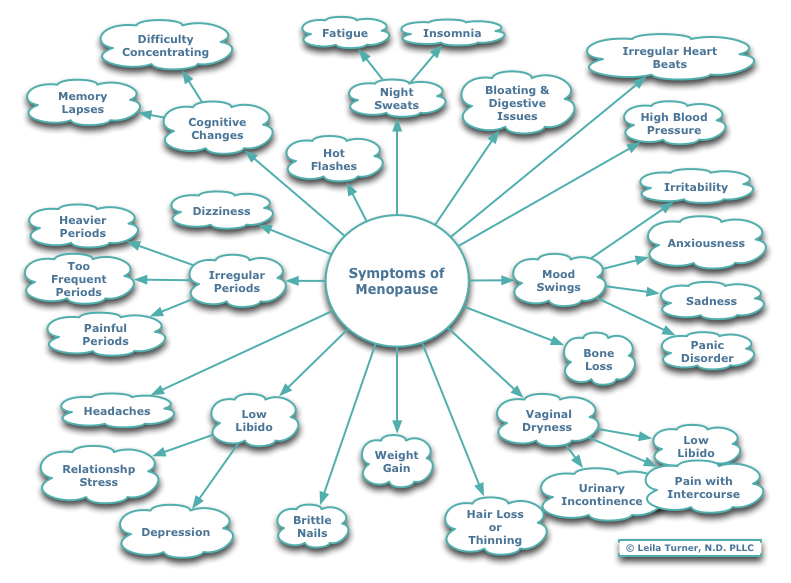
Menopause can last for years.  The mood swings, the highs and the lows, the hot flashes, being cold, losing memory, bone loss, terrible high blood pressure and I can go on and on.  It’s not as simple as people make it seem to be.  I really wish I had someone to prepare me for how bad it really is.  Mine began around 2009 – and is still ongoing.   Simply taking a ‘pill’ to stop the hot flashes is not enough for every woman.  It’s obvious something that we as women unfortunately have to deal with.  Every woman is different.  Some may not suffer anything.  Though I have never taken any hormone replacements or prescriptions to ease the menopause condition – maybe I should have.

I used to hear the saying that a woman is closest to death while in labor.  I think menopause can be similar to a person having a nervous breakdown or literally losing their mind.  For some women (such as myself and a couple of others I know), it makes you do and say things that feels as though you’re ‘outside of yourself’, things you’d never find yourself doing or saying in a normal state.  It’s almost as if someone is possessed with a demon.  I am so serious!  I have done and said some things inappropriately, I’ve cried, I’ve laughed and I’ve also felt as though I was having a breakdown.  All because of menopause.

My advice for women who may begin the state of menopause or you think you may have symptoms, go see your doctor.  Read, read and read articles that are out there regarding menopause and look at the signs and symptoms.  Pay attention to those symptoms and seek help for it.  It is no joke.  This is one time I really feel sort of bad for men who have spouses, relatives, friends going through menopause.  You know you have a true man in your life and loves you unconditionally when he can stick with you throughout this part of a woman’s life.  Those of us who do not have partners, please don’t suffer with this alone.  Seek professional help for this.  Don’t be ashamed and don’t think it’s something ‘bad’.  Get the help you need.  It will save you undo stress in your life, will save your health, and you can learn to lead a productive life!

Love You!

heart-620523_1280As Valentine’s Day is traditionally a time to celebrate ‘love’ – mainly someone you’re romantically involved with or affectionately attracted to, not everyone shares the same, for various reasons.  So today, here at You Empower your Health, I want to love on you, celebrate you, bring out the love in you so you can gladly share with someone else!.   Times like these can undoubtedly affect your health.  It can affect your mood, your mental health and your physical health.

Instead of ‘despising’ Valentine’s or hating on others and their ‘love’ for each other, treat YOU!  Treat yourself to what YOU would love to do!  Love YOU!!  Do something you’ve never done before for YOUR body, YOUR self.  Once you love on you, then share that love with someone whose alone, whose broken, an elderly person, or a person who may be ill, and by the end of this Valentine’s Day, after doing all of that, you will be so surprised how you’ve given yourself….and someone else a longer life, a healthier heart, a healthier mind and an overall healthier physical well being.   I LOVE YOU!!

American Heart Month

According to National Health Observances, February is designated as American Heart Month.  Not because it’s Valentine’s Day on February 14th, but because as a country, there are different health observances that we try to recognize by encouraging and educating heart-35348_1280ourselves and by empowering people to better health!

Heart disease is the leading cause of death here in the United States.  1 in 4 deaths are caused by heart disease yearly and unfortunately, I myself fall into the statistics of heart disease.  BUT……the good thing about it, I’ve survived it, I’m managing it and am doing great!  Take some time and read an earlier blog I posted a year or so ago called “Matters of the Heart” relating to my story of heart disease.

How we can help?  It’s easy.

  • Go to your local Red Cross and take CPR classes and donate – whether it’s donating blood, your time or financially.
  • If you’re a smoker, quit smoking!  It can be done, believe me.  Your heart will love you for it.
  • Heart healthy eating habits.  Tons and tons of reliable FREE information to read  online, and many books and articles regarding eating heart healthy meals.
  • Educate yourself about high cholesterol, high or low blood pressures, strokes and heart diseases and its many signs and symptoms, which are just some of the leading causes of heart disease.

As I often mention in my blogs, there is so much out here at our disposal to educate our own selves about our health.  We can begin by utilizing the Internet by reading and educating ourselves for free!!  It’s that simple.  Prevent becoming a statistic.  Help others by donating whatever you feel you can donate – your blood, your time, your knowledge, your resources – that others may not be privy to.